Americans are increasingly concerned about rising electricity bills, and many have pointed the finger at artificial intelligence. The proliferation of massive data centers powering AI models has become an easy scapegoat. But the reality behind soaring power costs is far more complex than the AI narrative suggests.
The Myth of AI-Driven Power Costs
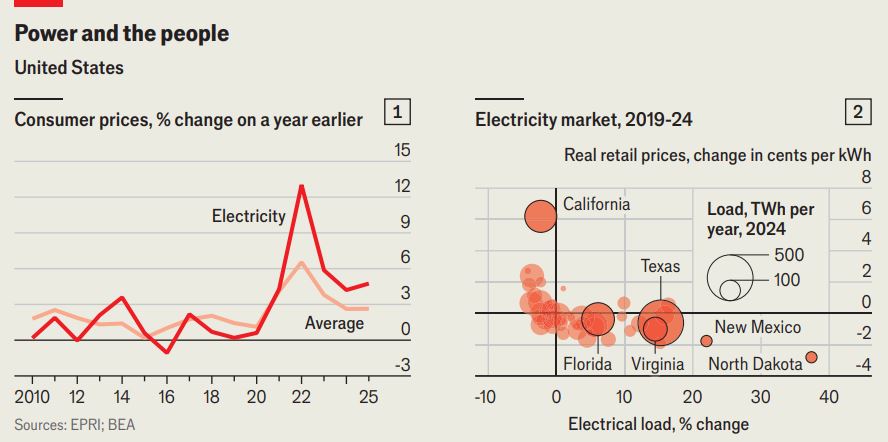
In towns like Ashburn, Virginia, known as "Data Centre Alley," roughly 150 data centers consume as much electricity as a city of 1.6 million people. It is tempting to blame these facilities for rising household bills. Yet electricity prices in the United States began climbing steadily in 2021, well before ChatGPT sparked the current AI boom. According to the Lawrence Berkeley National Laboratory, data center loads are not the primary factor behind higher rates.
Today, data centers account for less than one-tenth of total American electricity demand. Even with aggressive growth projections, they may reach about one-fifth by 2030. The real drivers of higher bills lie elsewhere: aging grid infrastructure that requires costly modernization, protection against increasingly severe weather events, and volatile natural gas prices that flow through to consumers.
What Is Really Driving Bills Up?
The American electricity grid is decades old in many regions, and utilities are spending heavily to upgrade transmission lines, substations, and distribution networks. These capital investments are passed on to ratepayers. At the same time, extreme weather events from hurricanes to heat waves are forcing utilities to harden their systems against disruptions, adding further costs.
Natural gas remains the dominant fuel for American power generation. When gas prices spike, as they did sharply in 2021 and 2022, electricity rates follow. These fluctuations have a far greater impact on the average household bill than any data center expansion.
Could AI Actually Lower Energy Costs?
Paradoxically, the growth of AI may end up benefiting electricity consumers. Major technology companies are investing billions in their own power generation capacity, including nuclear energy and clean energy projects. These investments add new supply to the grid without burdening existing ratepayers.
Companies like Microsoft are already using the battery systems in their data centers as grid stabilizers, helping to balance supply and demand during peak periods. When large, flexible industrial consumers connect to the grid, they can absorb excess power during off-peak hours and reduce consumption during peak times, which can actually lower costs for residential customers.
The irony is that if Americans want lower electricity bills, they might be better off calling for more AI infrastructure, not less. Large-scale tech investment in power generation and grid flexibility could be part of the solution rather than the problem.
A Question of Narrative vs. Evidence
The tendency to blame AI for rising electricity costs reflects a broader pattern: when new technologies emerge, they attract outsized blame for existing systemic problems. The American power grid has faced underinvestment and regulatory challenges for decades. AI data centers are a new and visible addition to the landscape, but they are not the root cause of a problem that predates them.
Policymakers and consumers alike would benefit from a more evidence-based understanding of where electricity costs actually originate. Addressing the real drivers, from grid modernization to energy market reform, will do far more to bring bills under control than restricting the growth of an industry that may ultimately help solve the problem.
Analysis inspired by: The Economist, March 7, 2026. "Electricity in America: A load of nonsense."