For decades, the United States has served as the world's premier destination for scientific talent, attracting researchers with unmatched funding, institutional freedom, and a culture of innovation. However, sweeping cuts to federal research budgets and growing instability in the academic landscape are now pushing young scientists to seek opportunities abroad, marking a potential reversal of a migration pattern that has defined global research for over half a century.
A Historical Shift in Scientific Migration
The United States' dominance in global science was not always a given. In the late 19th century, Germany led the world in scientific research. It was only after the devastation of two World Wars—and the subsequent flight of European researchers, including Albert Einstein—that the U.S. emerged as the undisputed hub for scientific discovery. The Manhattan Project, the postwar expansion of federally funded laboratories, and the creation of agencies like the National Science Foundation cemented America's position as the place where the world's best minds wanted to work.
What made American science uniquely attractive was not just money. The system offered young professors remarkable freedom compared to the rigid hierarchies of European academia. Scientists could bring their families, become citizens, and pursue their research with minimal bureaucratic interference. This combination of funding, freedom, and openness created a magnetic pull that lasted for generations.
The Current Crisis
Since early 2025, the landscape has shifted dramatically. Nearly 8,000 research grants have been canceled or frozen, and around 25,000 federal scientists and employees of research agencies have lost their jobs. The proposed 40% cut to the National Institutes of Health budget—the largest public funder of biomedical research in the country—sent shockwaves through the academic community. International researchers have faced additional uncertainty as visa sponsorship programs have come under threat.
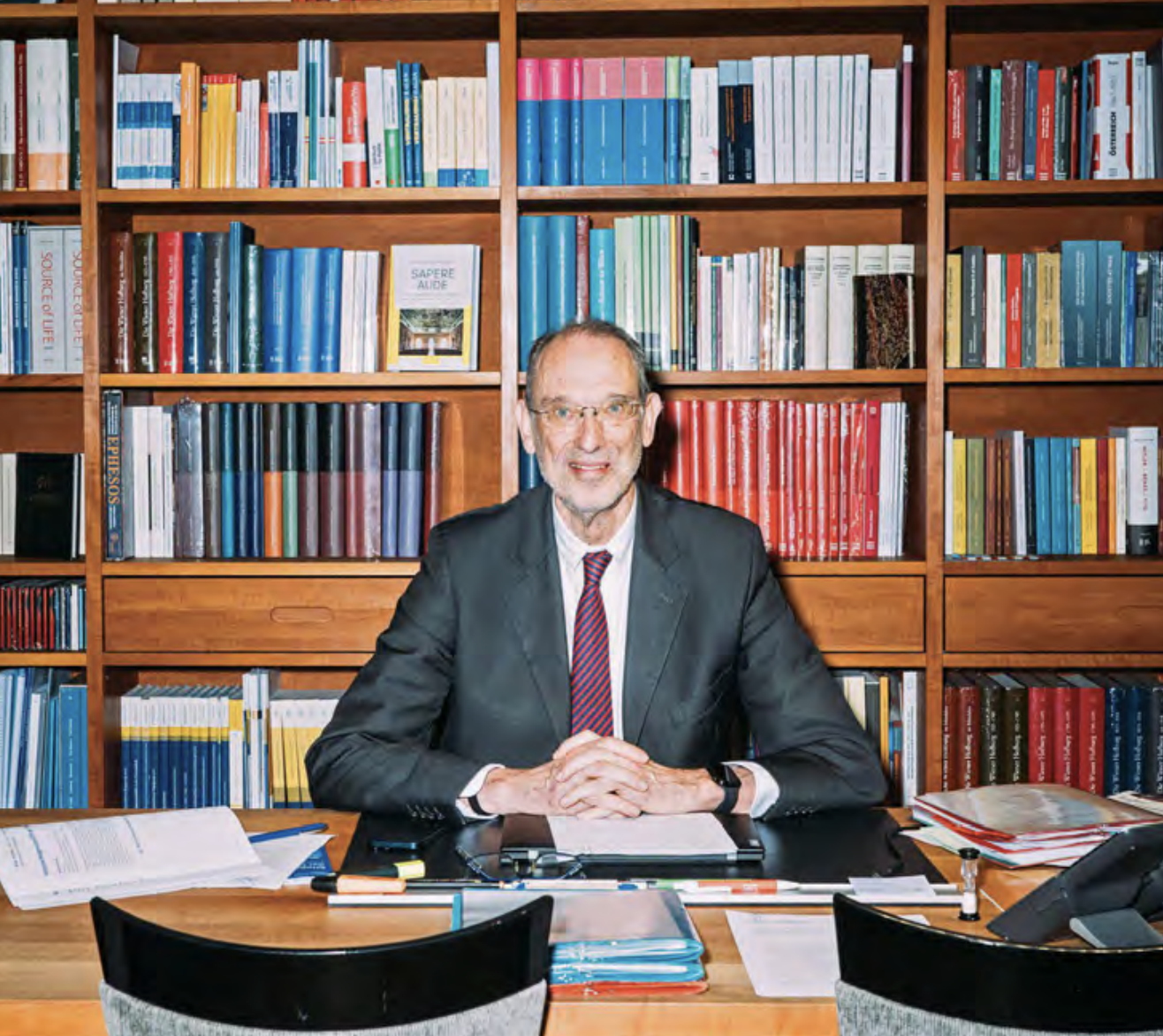
"The United States profited from the migration flow of highly qualified persons, decades after the Second World War. And now, it's maybe the first time that we can move around this migration direction—that Europe can profit from the talents that are educated in the United States." — Heinz Fassmann, President of the Austrian Academy of Sciences
Europe Seizes the Opportunity
European nations have moved quickly to capitalize on America's scientific instability. Austria launched the APART-USA fellowship, specifically designed for researchers leaving American institutions, offering four years of generous research funding. The European Union granted 500 million euros for the "Choose Europe" initiative to attract international researchers. Germany's Max Planck Society announced its Transatlantic Program, and France revealed 100 million euros in funding to recruit international scientists.
These programs have already yielded results. U.S. scientists submitted 32% more applications for jobs abroad between January and March 2025 compared to the same period in 2024. Page views of international job postings from U.S.-based researchers spiked by 68% in March alone, as the administration intensified its cuts to science funding.
Economic Implications
The consequences of this scientific migration extend far beyond academia. Since 1975, the percentage of new U.S. patents drawing on federally funded science has roughly tripled, to nearly a third of all patents filed. A dispersal of scientific talent threatens the innovation pipeline that has long fueled American technological leadership, patent output, and economic competitiveness.
Europe, despite funding only about 20% of the world's research and development compared to the U.S.'s roughly 29%, sees an unprecedented opportunity to reclaim scientific prestige lost during the 20th century. However, experts note that large investments in basic science typically require a rapidly growing economy—something Europe currently lacks. China, now funding around 28% of global R&D, represents another competitor, though most researchers moving to China are U.S.-educated Chinese scientists returning home rather than new immigrants.
"I think what we're going to see now is a dispersal of scientific talent, and I think that's costly, not just to the United States, but to the world." — Deborah Seligsohn, Villanova University
An Uncertain Future
The long-term trajectory remains unclear. Congress has pushed back against some proposed funding cuts, and some institutions have adapted. Harvard enrolled a record number of international students in 2025. But the damage to confidence has been done. Scientists, by necessity, must go where the funding and institutional support exist for their highly specialized work.
Meanwhile, global instability adds another layer of uncertainty. European scientists themselves feel insecure about the conflict in Ukraine and fears that government spending may increasingly turn toward defense at the expense of scientific funding. The picture is one of a fragmenting global research landscape, where no single hub may emerge to replace what the United States once offered.
The historical lesson is sobering. Vienna, Berlin, and other European centers were once the world's scientific capitals. Their decline came swiftly, driven by political upheaval. Whether the current moment represents a similar inflection point for American science—or a temporary disruption—may be the most consequential question in global research policy today.
Source: TIME (USA), March 9, 2026. "The New Brain Drain" by Veronique Greenwood.